

A few weeks ago I read an article in the New York Times about the frantic search by the ultra-rich for immortality. I sat down to write an article about this uninformed waste of time and money, but it turned out to be very long. Here I present the first page and afterwards you can read the short version. Enjoy!
I was quite amused
As the author of 11 spiritual books over the last 24 years (my first book titled “Death is an Illusion” was published in 2002) I was quite amused by the irony of the endeavor described below. I could not help smiling when I read an article published in The New York Times on April 24th 2026 titled “The Rich and Powerful Want to Live Forever. What if They Could?”, written by the Dublin based author Mark O’Connell.
This article is about the latest attempts by billionaires, presidents and various superrich companies to prolong physical life and somehow, via science, obtain immortality. Billions of dollars are being spent on this endeavor which includes wealthy people funding longevity clinics experimenting with anti-aging drugs, blood plasma / stem-cell style treatments and the like. One of the people involved is Bryan Johnson, who has devoted his fortune to the pursuit of eternal life through an array of approaches: focusing on biohacking to reverse his biological age, aiming to optimize his body to the level of an 18-year-old, plus prodigious consumption of supplements, gene therapy, immunosuppressants, transfusions of plasma from his son and the taking of detailed measurements as to the quality and durability of nocturnal erections. Also Jeff Bezos is reportedly among the major funders of Altos Labs, a company that hopes to find stem cell therapies to extend human life spans. Peter Thiel has signed himself up to be cryogenically preserved, i.e. having his body frozen and then defrozen once the key to immortality has been discovered. Also Sam Altman has said he takes the diabetes medication metformin as part of an anti-aging regimen, despite somewhat shaky evidence of its efficacy.
And most impressive and dubious: In 2023 the futurist entrepreneur Peter Diamandis unveiled XPrize Healthspan, a seven-year competition for longevity research whose goal is to award $101 million to a team that “successfully develops a proactive, accessible therapeutic that restores muscle, cognition and immune function by a minimum of 10 years, with a goal of 20 years, in persons aged 65-80 years, in one year or less.”
Now, this may all seem very well, if it were not for the simple fact that what they are pursuing, i.e. eternal life, is something that we all already have completely for free and have enjoyed for millions of years. Instead of taking the spiritual approach to the possibility of rebirth and life after death they have simply taken the mainstream narrative “when the body dies, we die, because we are identical to our body” as the definite, proven truth and are prepared to waste billions of dollars on this totally false assumption.
In this modern day and age the evidence for the survival of consciousness after permanent physical death has reached new levels, so that when we add this up with spiritual science, we can say with absolute certainty that death is an illusion and that life is not something that we can lose.
Short version: The Futile Quest for Something We Already Have
As the author of 11 books on spiritual science over the past 24 years—beginning with Death Is an Illusion in 2002—I read with astonishment, and not a little amusement, about the growing obsession among the ultra-wealthy with conquering death.
Billions are now being poured into the pursuit of physical immortality. Tech billionaires and investors fund longevity clinics, stem-cell research, cryonics, and extreme biohacking. Bryan Johnson attempts to reverse his biological age. Jeff Bezos backs companies seeking to reprogram cells. Peter Thiel plans to be frozen after death. Sam Altman experiments with anti-aging drugs.
It is a breathtaking effort.
And it is built on a false premise.
The entire project rests on one unproven belief: that we are identical to our physical bodies, and that when the body dies, we cease to exist. This belief is treated as fact, yet it has never been proven. It is an assumption—one so deeply ingrained that few dare to question it.
From that assumption, everything else follows. If we are the body, then death is annihilation. And if death is annihilation, then it must be defeated at any cost.
But what if the premise itself is wrong?
Modern humanity has largely abandoned religion, and with it the belief in life beyond death. In its place, we have elevated science as the sole authority on reality. Though science studies matter, they do not – and cannot, in their current form – explain consciousness itself. They can measure brain activity but cannot explain the experiencer behind the measurements.
This is where the error begins.
The Danish thinker Martinus described a framework he called spiritual science: a logical understanding of life in which existence has both a physical and a spiritual dimension. In this view, the body is not who we are. It is a temporary instrument. Consciousness—the “I” that experiences—is fundamental and cannot be reduced to matter.
If this is true, then the fear of death is based on a misunderstanding of our own nature.
There is, in fact, substantial evidence that challenges the idea that consciousness ends with the body. Near-death experiences, studied for decades, consistently describe clear awareness during periods when the brain is inactive. Individuals report leaving the body, encountering a non-physical reality, and returning transformed, with the absolute certainty that consciousness continues.
Research into children who recall previous lives—often with verifiable details—points in the same direction. So does regression therapy, where individuals access experiences that do not belong to their present lifetime and, in doing so, resolve deep psychological trauma.
These phenomena are dismissed because they do not fit the prevailing worldview. But dismissing evidence is not the same as refuting it.
If consciousness is not produced by the brain, but is instead a form of energy, then the implications are profound. Energy cannot be created or destroyed. It can only change form. If our consciousness is an energy-based field—what has traditionally been called the soul—then it does not disappear at death. It continues.
We are not our bodies. We never were.
The body is a temporary vehicle, used for a limited period of time. When it can no longer function, we leave it—just as we have done before—and continue our existence beyond the physical plane.
From this perspective, life is not a one-time event, but part of a vast evolutionary process spanning countless lifetimes. Each life contributes to the development of our abilities, our understanding, and our capacity for empathy. Nothing is lost. Everything is carried forward.
This process also explains what we call talent. Abilities that appear early, without training, are not accidents. They are the result of long-term development across many lives. What we have practiced before, we bring with us again.
Seen in this light, the modern quest for physical immortality is not just misguided—it is unnecessary.
We are already immortal.
What we truly fear is not death, but the loss of identity. Yet the very thing we identify with—the body—is the only part of us that is temporary. The core of who we are, our consciousness, is continuous.
No amount of money, technology, or scientific effort will change this. You cannot engineer immortality for something that is already immortal. You can only misunderstand it.
This does not make medical progress meaningless. Extending healthy life and reducing suffering are worthy goals. But the attempt to avoid death altogether—based on the belief that death ends existence—is chasing the wrong problem.
The irony is striking: while billions are spent trying to achieve immortality, what is being sought has never been absent.
We are not on the brink of discovering eternal life.
We are already living it.
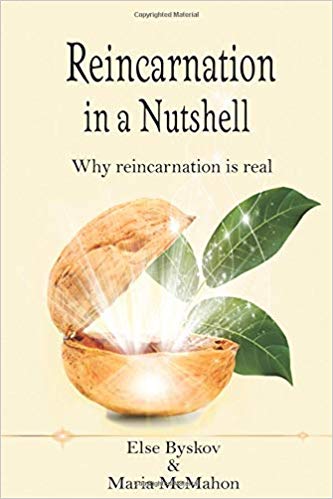
 Else Byskov is an authority on the groundbreaking work of Martinus (1890-1981), the Danish philosopher, visionary and mystic.